Charge any Type 2 EV from a standard Australian power point. The SEVR 10A is $183.99, the lowest price in Australia for the same model, with free shipping and a 3-year warranty.
2.3 kW~13 km/h4.5 m3-yr warranty
Free shipping
Ships in 1 business day
30-day returns
3.45 kW~19 km/h6 m
15A + 10A2 chargers
Lowest price in AustraliaSame model, same warranty, for less
RCM-registered models onlyApproved for sale in Australia
Free shippingFrom Australian stock, 1–6 days
2–3 year warrantyManufacturer-backed · 30-day returns
The short answer
Best portable EV charger in Australia
Written by Jack, owner of Sparkie EV, Victoria. Last reviewed .
Only charging at home, under ~150 km a day? A 15 A portable charger on a dedicated outlet adds about 19 km per hour, or roughly 190 km overnight.
Need a backup or a road-trip cable? A 10 A portable charger works from any Australian power point at about 13 km per hour.
Want both without adapters? Keep a 15 A charger at home and a 10 A charger in the boot. The Home + Travel bundle is both, for less than buying them separately.
Non-negotiable: look for the RCM mark. CE or TÜV alone is not approval to sell in Australia.
In stock · free shipping · 3-year warranty
Overnight range calculator
How far will one night of charging get you?
The range
Portable chargers
Chargers from SEVR and EVSE Australia, each with an IP66 control box and built-in electrical protection. Free shipping Australia-wide, 2–3 year manufacturer warranty, 30-day returns. Each listing names the exact model and part number you'll receive; product images are illustrations.
In stock
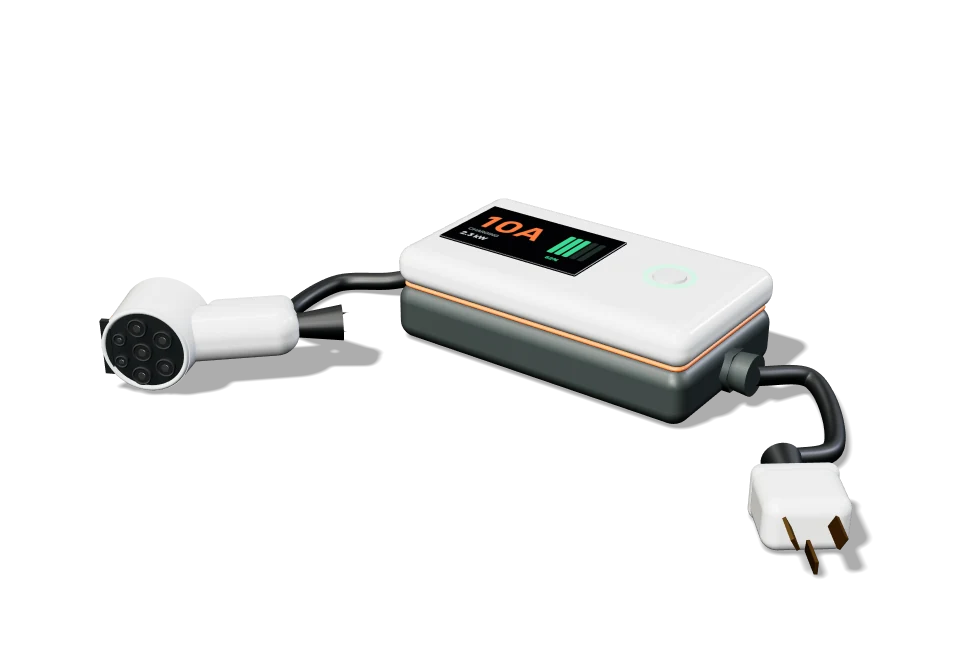
SEVR EV Portable Charger, 10A plug
10 A max2.3 kW~13 km/h4.5 mIP66 · IK103-yr warranty
Plugs into any standard power point. The one to keep in the boot for holiday houses, the in-laws, and the night the public charger is broken.
Ships within 1 business day from Australian stock
$183.99Lowest price in Australia · free shipping · SV-SCXP-2.4-T5-W
Coming soon · best for home
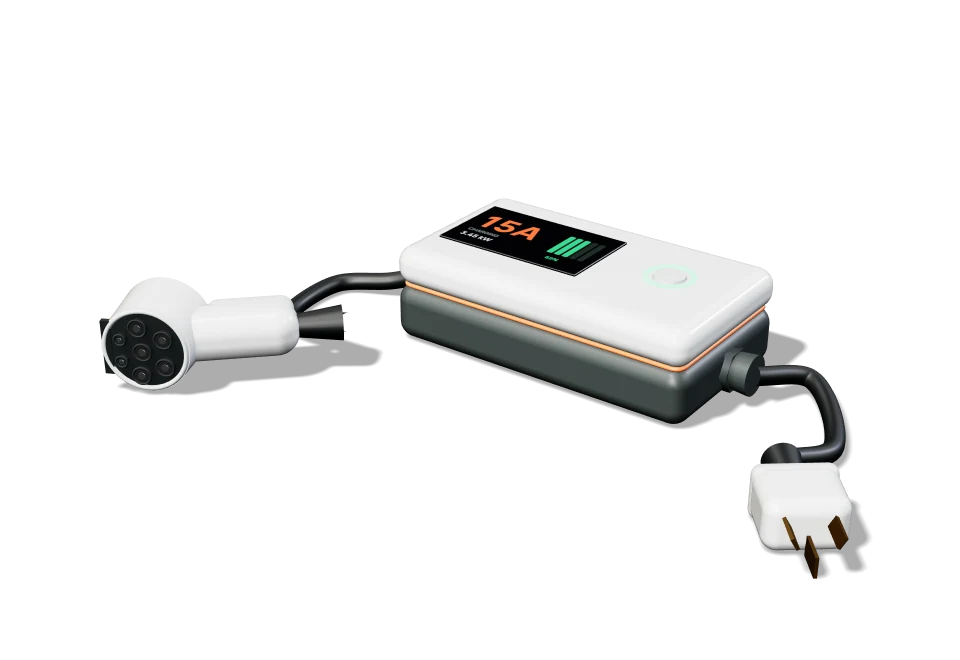
EVSE Australia Mini Portable Type 2 Charger, 15A plug
50% faster than 10 A. Needs a dedicated 15 A or 20 A outlet, installed by a licensed electrician. Covers most daily commutes overnight.
$239Lowest price in Australia · free shipping · OC-BN20-15A-T2
Coming soon · save $23.99
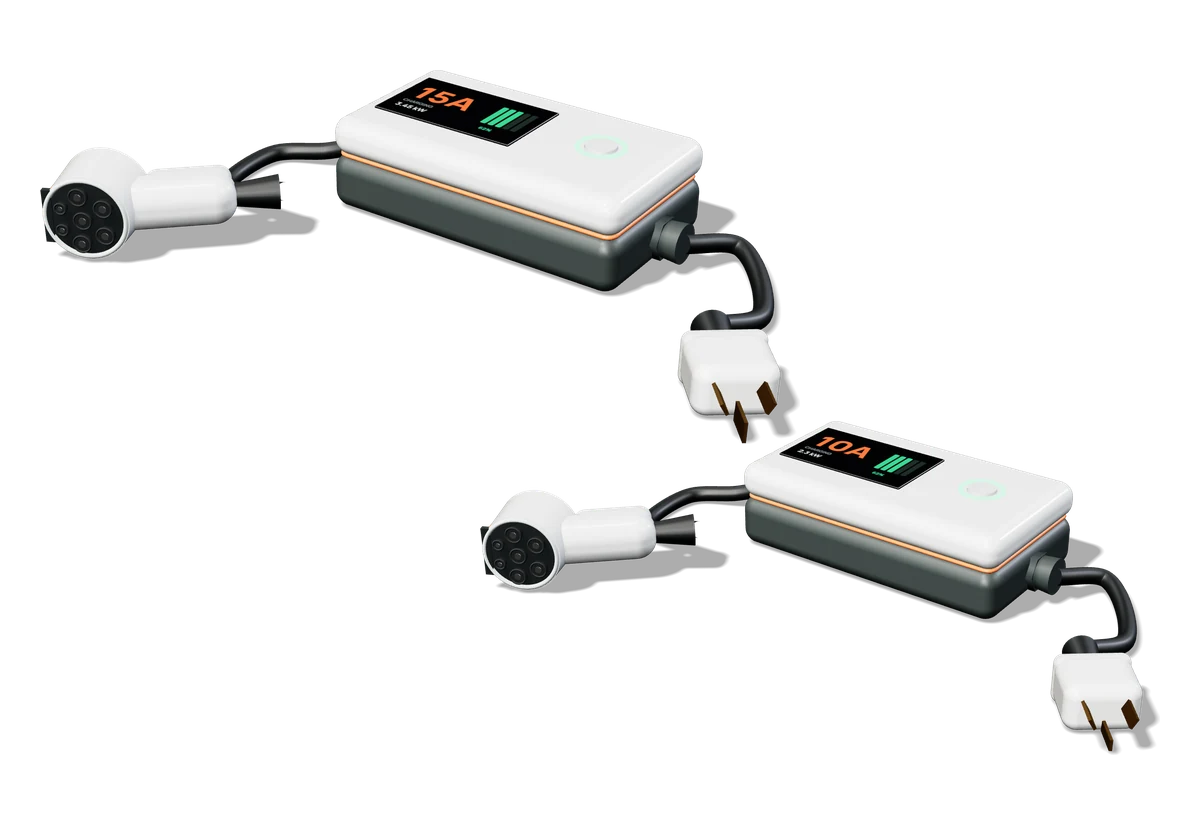
Home + Travel bundle: EVSE Australia 15A + SEVR 10A
2 chargers15A at home10A on the roadNo adapters
The 15A for your dedicated outlet at home, the 10A in the boot for everywhere else. Two separate chargers, so there's no plug swapping and no adapter.
$399Lowest price in Australia · free shipping
Coming soon · Type 1
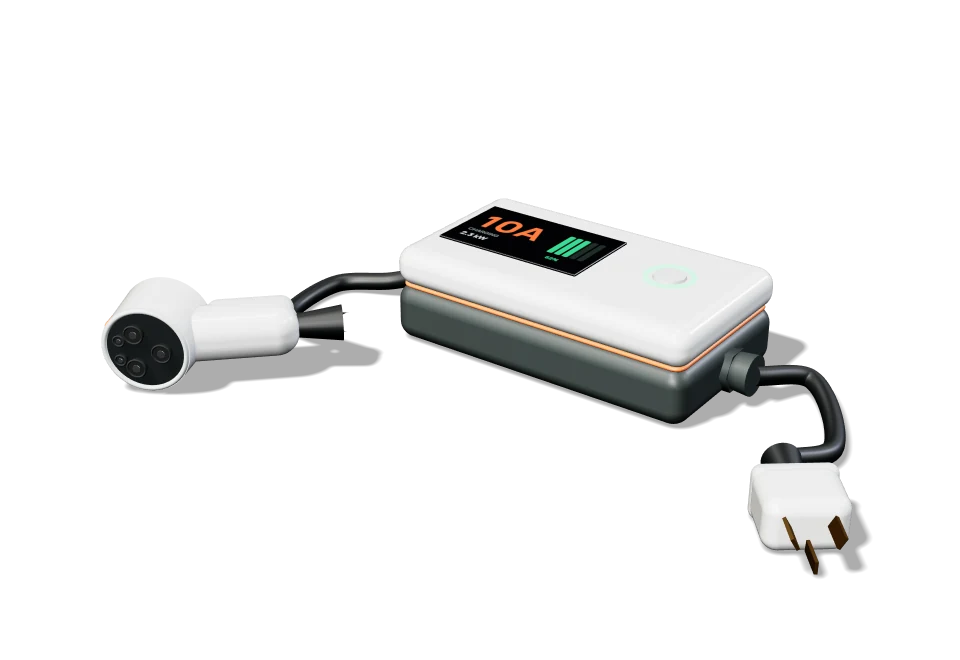
EVSE Australia Portable Type 1 (J1772) Charger, 10A plug
Type 1 · J17728 A max1.8 kW5 mIP66 · RCD2-yr warranty
For older EVs and PHEVs with a Type 1 inlet, including the 2012–2017 Nissan Leaf and pre-2022 Mitsubishi Outlander PHEV. Plugs into any standard power point.
$399Lowest price in Australia · free shipping · OC-PCD030-8A-T1
Coming soon from SEVR
Wall chargers, cables & accessories
More of the SEVR range, from the same Australian supplier as our 10A portable (Metal Manufactures Pty Limited, RCM marked, 3-year warranty). Prices shown are SEVR's recommended retail; our prices go up as soon as they're confirmed. Wall chargers are hard-wired and must be installed by a licensed electrician, which we don't provide.
SEVR ESeries 7 wall charger, 7 kW single-phase
7 kWSingle-phaseUp to 32 A4.2 m tethered Type 2IP543-yr warranty
A simple standalone home charger with its own Type 2 cable, about three times faster than a 10 A portable (roughly 40 km of range per hour). Built-in DC leakage protection, so the switchboard needs only a Type A RCBO.
Installation by a licensed electrician is required and not included. We sell the charger only.
The connected version: schedule and monitor charging in the SEVR app, lock it with RFID, and add the CT module to charge from excess solar or balance the load with the rest of the house.
Installation by a licensed electrician is required and not included. We sell the charger only.
Price soonSEVR RRP $649 · Opti7
SEVR ESeries 22 wall charger, 22 kW three-phase
22 kWThree-phaseTethered Type 23-yr warranty
For homes with three-phase power. Your car's onboard charger sets the real rate, and many EVs take 11 kW on AC, so check your car's AC limit before paying for 22 kW.
Installation by a licensed electrician is required and not included. We sell the charger only.
The three-phase Opti: app control, RFID, and solar or load balancing with the Opti22 CT module.
Installation by a licensed electrician is required and not included. We sell the charger only.
Price soonSEVR RRP $769 · Opti22
SEVR Type 2 charging cable, 7 kW single-phase
Type 232 AIP555 m, 7 m or 10 m3-yr warranty
For public AC charging posts that have no cable of their own, and for untethered home chargers. Comes with a carry bag.
Price soonSEVR RRP $142 (5 m), $186 (7 m), $230 (10 m) · SV-EVCBL-7KW-5M / -7M / -10M
SEVR Type 2 charging cable, 22 kW three-phase
Type 2Three-phase5 m, 7 m or 10 m3-yr warranty
The heavier three-phase cable, for cars that can charge faster than 7 kW at three-phase public posts.
Price soonSEVR RRP $219 (5 m), $274 (7 m), $329 (10 m) · 22 kW cable
SEVR V2L adaptor (vehicle-to-load)
Type 2 vehicle side15 A Australian socketIP203-yr warranty
Runs appliances from your EV's battery through its Type 2 port, on cars that support V2L (many BYD, Hyundai, Kia, MG and others). Check SEVR's compatibility list for your exact model first.
Price soonSEVR RRP $77 · SV-EVACC-V2L-B
SEVR wall-mounted charge cable hanger
Wall mountHolds cable and plug
Keeps the cable and connector off the garage floor and out of the way of the car.
Price soonSEVR RRP $22 · SV-EVACC-HNGR-V2
SEVR Opti CT module and clamps
For Opti7 or Opti22Solar chargingLoad balancing
The add-on that lets an Opti charger charge from excess solar and stay within your home's supply limit. Needs an electrician to fit the clamps in the switchboard.
Most Australians drive about 30–40 km a day. Any option below replaces that overnight; the difference is how much headroom you get for longer days.
Option
Power
Range per hour
10 hours overnight
Install needed
Typical cost
10A portable
2.3 kW
~13 km
~130 km
None. Existing power point (own circuit preferred)
$183.99
15A portable
3.45 kW
~19 km
~190 km
Dedicated 15 A/20 A outlet by a licensed electrician
$239 + outlet install
7 kW wall charger
7.4 kW
~42 km
Full charge for most EVs
Dedicated 32 A circuit, possible switchboard upgrade
$1,200–$2,300 installed
Estimates at 230 V, 90% efficiency, 16 kWh/100 km. Wall charger pricing is a typical single-phase installed range from Australian industry estimates; your quote depends on your switchboard and cable run.
Compatibility
Will it fit my car?
Every EV sold new in Australia today uses the Type 2 AC inlet. Charging times below are for a typical 20% → 80% top-up.
Every Type 2 car above works with the SEVR 10A. In stock, $183.99, free shipping.
Safety basics
Portable EV charger safety: what an electrician checks
A car draws its full rated current for 10+ hours straight. That is a harder job than almost anything else you plug into a house, so the basics matter.
✕
Adapt a 15A plug into a 10A socket
The larger earth pin exists so a 15 A load can't go into a 10 A outlet. Adapters that defeat it are widely sold online. Use a genuine 10 A plug or a tail-swap kit instead.
✕
Use powerboards or extension leads
They aren't built for hours of continuous load. Plug the charger straight into the wall, and stop if the plug or outlet feels hot.
✓
Check for the RCM mark
EV chargers sold in Australia must be registered under the EESS and ACMA schemes. CE or TÜV marks alone don't count here.
✓
Get older wiring looked at
In older homes, an outlet sharing a circuit with the fridge or a heater, or ageing rubber-insulated cable, is the weak link. A dedicated EV circuit fixes both.
Before you buy a 15A charger
You'll need a dedicated 15 A outlet
A 15A charger's plug only fits a 15 A (or 20 A) outlet, and most homes don't have one. Getting one installed is a job for a licensed electrician. In Victoria they must be a Registered Electrical Contractor, and they'll give you a Certificate of Electrical Safety when it's done. We don't do installs ourselves. Not sure you need one? Read Do I need an electrician? (VIC).
What to ask your electrician forA dedicated 15 A or 20 A circuit just for the chargerRCD protection on that circuitA Certificate of Electrical Safety when the job is doneA written quote that includes any switchboard work
Questions
Portable EV charging FAQ
Can I charge an EV from a normal power point in Australia?
Yes. A portable Mode 2 charger with a 10 A plug works from a standard Australian power point and adds roughly 10–13 km of range per hour. Plug straight into the wall, never into a powerboard or extension lead, and ideally use an outlet on its own circuit.
What is the difference between a 10A and a 15A portable EV charger?
A 10 A charger delivers about 2.3 kW (around 13 km per hour). A 15 A charger delivers about 3.45 kW (around 19 km per hour), roughly 50% faster, but it needs a dedicated 15 A or 20 A outlet installed by a licensed electrician.
Is it safe to use a 15A to 10A adapter for an EV charger?
No. Adapting a 15 A plug down to a 10 A socket defeats the plug design that stops a 10 A outlet being overloaded. Use a charger with a genuine 10 A plug or a tail-swap kit where the charger detects the tail and limits current itself.
How long does a portable charger take to charge an EV?
Taking a Tesla Model Y RWD (about 60 kWh) from 20% to 80% takes about 17 hours on 10 A and about 12 hours on 15 A. Most drivers top up overnight instead: 10 hours on 15 A adds roughly 190 km.
What does RCM mean on an EV charger?
The Regulatory Compliance Mark shows the equipment is registered for sale in Australia under the electrical safety (EESS) and ACMA schemes. Overseas marks such as CE or TÜV alone do not meet Australian requirements.
Do I need an electrician to install a 15A outlet for EV charging in Victoria?
Yes. Installing an outlet is prescribed electrical work in Victoria, so it must be done by a licensed electrician who issues a Certificate of Electrical Safety.
Will a portable charger work with a Tesla Model Y or BYD?
Yes. Tesla, BYD, MG, Kia, Hyundai, Geely, Zeekr and Polestar models sold new in Australia use the Type 2 AC inlet, so any Type 2 portable charger fits. Older Nissan Leafs (2012–2018) and pre-2022 Outlander PHEVs use Type 1.
Should I buy a portable charger or a wall charger?
If you drive under about 150 km a day, a 15 A portable charger usually covers it overnight for a fraction of the cost. A 7 kW wall charger (typically $1,200–$2,300 installed) suits long daily drives, two EVs, or charging from solar.
Why are your prices so low?
We only sell online and our suppliers dispatch straight from their Australian stock, so there's no showroom or warehouse in the price. You get the exact same model and part number, with the same manufacturer's warranty. We last checked every Australian retailer selling these models on 4 November 2026. If you find the same model cheaper at an Australian retailer, email sparkieevchargers@gmail.com with a link.
SEVR 10A portable EV charger$183.99 · free shipping · in stock