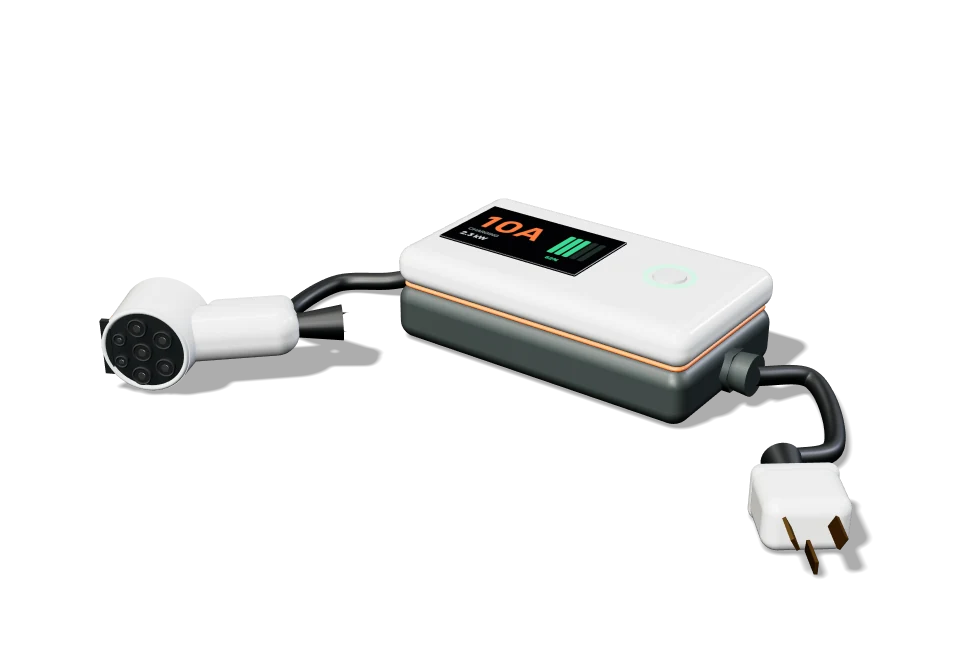
SEVR EV Portable Charger, 10A plug
Plugs into any standard power point. The one to keep in the boot for holiday houses, the in-laws, and the night the public charger is broken.
Type 2 chargers for Australian 10 A and 15 A power points, priced under every Australian retailer selling the same model (see the price check). Plug in at dinner, wake up with ~190 km more.
Chargers from SEVR and EVSE Australia, each with an IP66 control box and built-in electrical protection. Free shipping Australia-wide, 2–3 year manufacturer warranty, 30-day returns. Each listing names the exact model and part number you'll receive; product images are illustrations.

Plugs into any standard power point. The one to keep in the boot for holiday houses, the in-laws, and the night the public charger is broken.

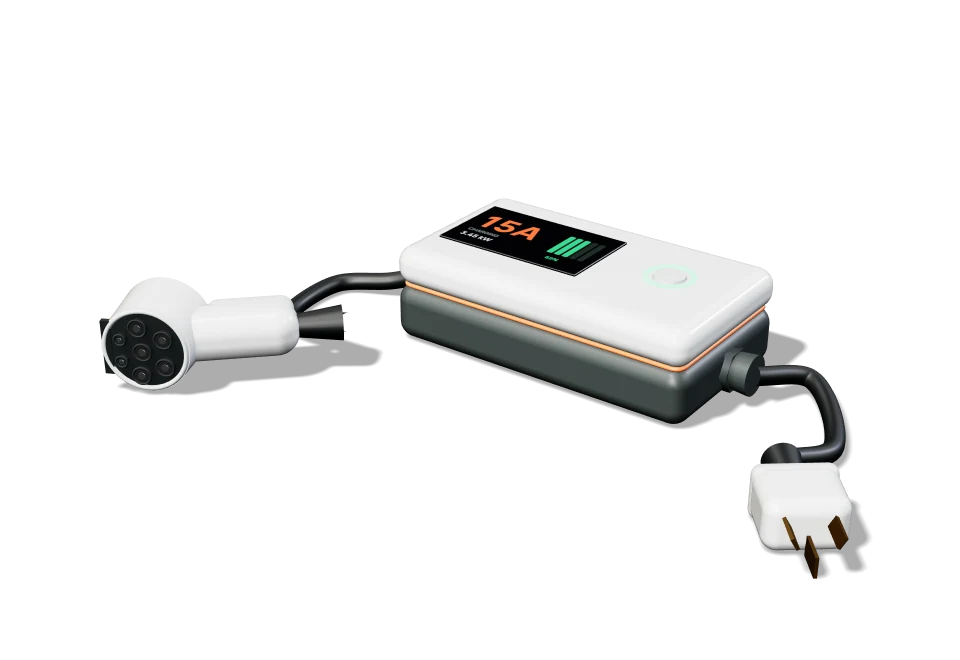
50% faster than 10 A. Needs a dedicated 15 A or 20 A outlet, installed by a licensed electrician. Covers most daily commutes overnight.

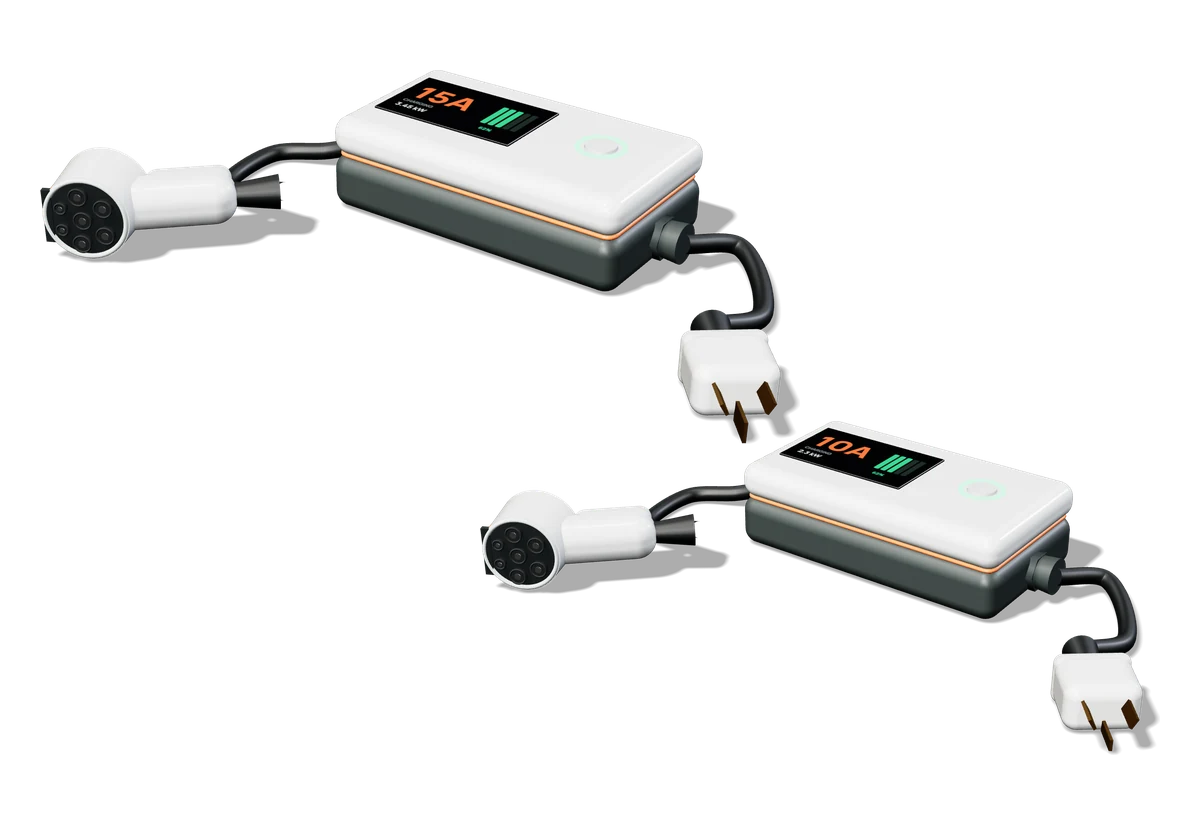
The 15A for your dedicated outlet at home, the 10A in the boot for everywhere else. Two separate chargers, so there's no plug swapping and no adapter.

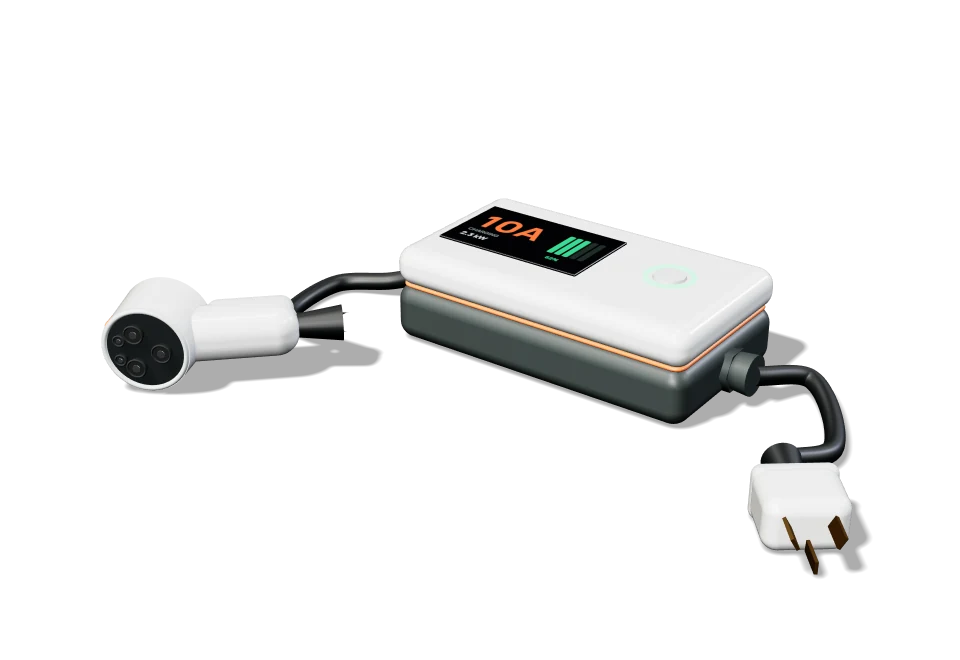
For older EVs and PHEVs with a Type 1 inlet, including the 2012–2017 Nissan Leaf and pre-2022 Mitsubishi Outlander PHEV. Plugs into any standard power point.
We compared our prices with every Australian retailer we could find selling the exact same model, matched by part number. You get the same charger and the same manufacturer's warranty for less, with free shipping.
| Model | Sparkie EV | Cheapest elsewhere | You pay less | Other Australian retailers |
|---|---|---|---|---|
| SEVR 10A portable SV-SCXP-2.4-T5-W | $179 | $188 Harvey Norman | $9 | $189 Mitre 10 · $189 EV-NRG · $199 SEVR · $199 Bunnings · $199 EV Charging Australia · $249 This is Electric |
| EVSE Australia 15A Mini OC-BN20-15A-T2 | $239 | $249 EVSE Australia | $10 | Only sold direct by EVSE Australia (was $395) |
| Home + Travel bundle Both chargers above | $399 | $437 | $38 | Buying each charger at its cheapest price elsewhere |
| EVSE Australia Type 1, 10A plug OC-PCD030-8A-T1 | $399 | from $412 EVSE Australia | $13 | Only sold direct by EVSE Australia |
Most Australians drive about 30–40 km a day. Any option below replaces that overnight; the difference is how much headroom you get for longer days.
| Option | Power | Range per hour | 10 hours overnight | Install needed | Typical cost |
|---|---|---|---|---|---|
| 10A portable | 2.3 kW | ~13 km | ~130 km | None. Existing power point (own circuit preferred) | $179 |
| 15A portable | 3.45 kW | ~19 km | ~190 km | Dedicated 15 A/20 A outlet by a licensed electrician | $239 + outlet install |
| 7 kW wall charger | 7.4 kW | ~42 km | Full charge for most EVs | Dedicated 32 A circuit, possible switchboard upgrade | $1,200–$2,300 installed |
Every EV sold new in Australia today uses the Type 2 AC inlet. Charging times below are for a typical 20% → 80% top-up.
| Model | Inlet | Battery (approx.) | 20→80% on 10A | 20→80% on 15A |
|---|---|---|---|---|
| Tesla Model Y RWD | TYPE 2 | 60 kWh | 17.4 h | 11.6 h |
| Tesla Model Y Long Range | TYPE 2 | 78 kWh | 22.6 h | 15.1 h |
| BYD Sealion 7 | TYPE 2 | 82.5 kWh | 23.9 h | 15.9 h |
| BYD Atto 3 | TYPE 2 | 60.5 kWh | 17.5 h | 11.7 h |
| BYD Atto 2 | TYPE 2 | 45 kWh | 13.0 h | 8.7 h |
| Geely EX5 | TYPE 2 | 60 kWh | 17.4 h | 11.6 h |
| MG4 | TYPE 2 | 64 kWh | 18.6 h | 12.4 h |
| Kia EV5 | TYPE 2 | 88 kWh | 25.5 h | 17.0 h |
| Zeekr 7X | TYPE 2 | 75 kWh | 21.7 h | 14.5 h |
| Hyundai Ioniq 5 | TYPE 2 | 84 kWh | 24.3 h | 16.2 h |
| Nissan Leaf (2012–2018) | TYPE 1 | 24 kWh | 7.0 h | 4.6 h |
| Mitsubishi Outlander PHEV (pre-2022) | TYPE 1 | 13.8 kWh | 4.0 h | 2.7 h |
A car draws its full rated current for 10+ hours straight. That is a harder job than almost anything else you plug into a house, so the basics matter.
The larger earth pin exists so a 15 A load can't go into a 10 A outlet. Adapters that defeat it are widely sold online. Use a genuine 10 A plug or a tail-swap kit instead.
They aren't built for hours of continuous load. Plug the charger straight into the wall, and stop if the plug or outlet feels hot.
EV chargers sold in Australia must be registered under the EESS and ACMA schemes. CE or TÜV marks alone don't count here.
In older homes, an outlet sharing a circuit with the fridge or a heater, or ageing rubber-insulated cable, is the weak link. A dedicated EV circuit fixes both.
A 15A charger's plug only fits a 15 A (or 20 A) outlet, and most homes don't have one. Getting one installed is a job for a licensed electrician. In Victoria they must be a Registered Electrical Contractor, and they'll give you a Certificate of Electrical Safety when it's done. We don't do installs ourselves. Not sure you need one? Read Do I need an electrician? (VIC).
Yes. A portable Mode 2 charger with a 10 A plug works from a standard Australian power point and adds roughly 10–13 km of range per hour. Plug straight into the wall, never into a powerboard or extension lead, and ideally use an outlet on its own circuit.
A 10 A charger delivers about 2.3 kW (around 13 km per hour). A 15 A charger delivers about 3.45 kW (around 19 km per hour), roughly 50% faster, but it needs a dedicated 15 A or 20 A outlet installed by a licensed electrician.
No. Adapting a 15 A plug down to a 10 A socket defeats the plug design that stops a 10 A outlet being overloaded. Use a charger with a genuine 10 A plug or a tail-swap kit where the charger detects the tail and limits current itself.
Taking a Tesla Model Y RWD (about 60 kWh) from 20% to 80% takes about 17 hours on 10 A and about 12 hours on 15 A. Most drivers top up overnight instead: 10 hours on 15 A adds roughly 190 km.
The Regulatory Compliance Mark shows the equipment is registered for sale in Australia under the electrical safety (EESS) and ACMA schemes. Overseas marks such as CE or TÜV alone do not meet Australian requirements.
Yes. Installing an outlet is prescribed electrical work in Victoria, so it must be done by a licensed electrician who issues a Certificate of Electrical Safety.
Yes. Tesla, BYD, MG, Kia, Hyundai, Geely, Zeekr and Polestar models sold new in Australia use the Type 2 AC inlet, so any Type 2 portable charger fits. Older Nissan Leafs (2012–2018) and pre-2022 Outlander PHEVs use Type 1.
If you drive under about 150 km a day, a 15 A portable charger usually covers it overnight for a fraction of the cost. A 7 kW wall charger (typically $1,200–$2,300 installed) suits long daily drives, two EVs, or charging from solar.
We only sell online and our suppliers dispatch straight from their Australian stock, so there's no showroom or warehouse in the price. You get the exact same model and part number, with the same manufacturer's warranty. We last checked every Australian retailer selling these models on 4 November 2026. See the price check.